
Could a simple hearing test change your life? What if a simple 30-minute appointment was the only thing standing between you and hearing your loved ones clearly again?
Many Singaporeans delay booking an audiometry test because they worry about “failing” the assessment or feel intimidated by unfamiliar medical terms like decibels and frequencies.
In reality, a hearing test is not something you pass or fail. It’s simply a way to understand how well your ears work and whether you may benefit from additional support.
At Amazing Hearing Centre, we believe hearing care should feel approachable rather than overwhelming. Today we explain what an audiometry test involves, how hearing results are interpreted, and the hearing aid subsidies available in Singapore.
Most importantly, it will help you feel more confident about taking the first step towards better hearing.
Key Takeaways
- An audiometry test helps identify hearing changes before they begin affecting daily communication.
- Different hearing assessments measure both hearing sensitivity and speech clarity.
- Audiograms visually map the sound frequencies you struggle to hear.
- Singapore seniors may qualify for hearing aid subsidies through schemes such as the SMF.
What Is an Audiometry Test?
An audiometry test is a professional hearing assessment used to measure the softest sounds you can hear across different frequencies and volumes.
Rather than being a single test, audiometry usually involves several hearing evaluations that help audiologists understand how sensitive your hearing is, which frequencies are affected, and how clearly you process speech.
For many people, hearing loss develops gradually over time. Because the changes happen slowly, it’s common not to notice the problem until conversations start becoming frustrating or exhausting.
You may benefit from a hearing assessment if family members complain the television is too loud, conversations sound muffled, or you regularly ask people to repeat themselves.
Why Early Detection Matters
Hearing loss affects more than just volume.
Over time, untreated hearing difficulties may contribute to:
- communication fatigue,
- social withdrawal,
- and reduced confidence in conversations.
Many seniors gradually begin avoiding gatherings or noisy environments, because listening becomes mentally tiring. Early intervention can help prevent these frustrations from affecting overall quality of life.
Understanding Decibels and Frequencies
Hearing assessments measure sound using two key factors:
- decibels (dB), which measure loudness,
- and frequencies (Hz), which measure pitch.
Low frequencies include deeper sounds, such as thunder or bass tones, while higher frequencies affect speech clarity sounds like “S”, “F”, and “TH”.
This is why many people say:
“I can hear people talking, but I can’t understand what they’re saying.”
In many cases, the issue is not volume itself, but reduced sensitivity to specific speech frequencies.
The Main Types of Hearing Tests in Singapore
A complete audiometry assessment often includes several different tests, each designed to evaluate a different aspect of hearing health.
Pure Tone Audiometry (PTA)
This is the most common hearing test. You’ll listen to tones at different pitches and volumes through headphones, while indicating when you hear them.
The results help determine your hearing threshold across various frequencies.
Speech Audiometry
Hearing sounds and understanding words are not the same thing.
Speech audiometry evaluates how clearly you recognise spoken words in controlled listening conditions. This helps audiologists understand how hearing difficulties affect real conversations in daily life.
Tympanometry and Bone Conduction Testing
Some patients may also undergo additional tests, such as tympanometry or bone conduction testing.
These assessments help identify:
- fluid behind the eardrum,
- ear pressure problems,
- or whether hearing loss originates from the inner or outer ear.
What Happens During an Audiometry Test?
One of the biggest misconceptions about hearing tests is that they’re uncomfortable or invasive. In reality, the process is very straightforward.
A typical appointment usually lasts around 30 minutes.
Step 1: Ear Examination
The session normally begins with a quick physical examination of the ear canal using a small lighted instrument. This helps identify visible issues such as wax buildup or inflammation.
Step 2: Sound Booth Testing
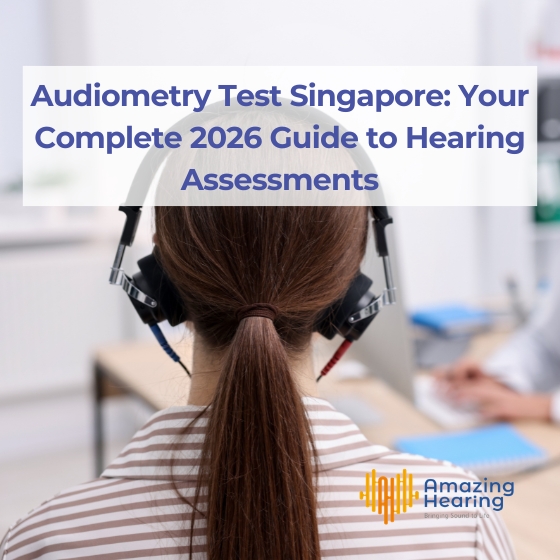
You’ll then sit inside a quiet soundproof booth wearing headphones.
During the test:
- tones will play at different frequencies,
- speech recordings may be used,
- and you’ll respond whenever you hear a sound.
The booth simply removes background noise so your results remain accurate.
Step 3: Reviewing Your Results
Once the assessment is complete, your audiologist will explain your audiogram and discuss whether any hearing support may be beneficial.
At Amazing Hearing Centre, we focus on explaining results in plain language, rather than overwhelming patients with technical jargon.
How to Prepare for Your Appointment
For the most accurate results, it’s best to avoid excessive noise exposure before your hearing assessment. This includes loud concerts, heavy machinery, or prolonged headphone use for several hours before your appointment.
It can also be helpful to bring a family member along, especially if they’ve noticed changes in your hearing that you may not have recognised yourself.
Understanding Your Audiogram
An audiogram is essentially a visual map of your hearing.
The chart shows:
- which frequencies you hear clearly,
- which sounds require higher volume,
- and the severity of any hearing loss.
Typically, red symbols represent the right ear while blue symbols represent the left ear. The graph measures pitch horizontally and volume vertically.
What the Results Mean
Hearing loss is usually categorised into mild, moderate, severe, or profound levels.
For example, mild hearing loss may affect whispers or soft speech, while moderate hearing loss often makes conversations in noisy environments significantly harder to follow.
Your audiologist uses this information to determine whether hearing aids or other hearing solutions may improve your communication and listening comfort.
Hearing Aids and Singapore Subsidies
If your hearing assessment indicates that hearing aids may help, there are several support schemes available in Singapore.
Eligible seniors may qualify for subsidies through programmes such as the:
- Seniors’ Mobility and Enabling Fund (SMF),
- Pioneer Generation benefits,
- or Merdeka Generation support schemes.
Modern hearing aids are also far more advanced than many people expect. Today’s models may include rechargeable batteries, Bluetooth connectivity, and discreet in-ear designs that fit naturally into daily life.
The right device depends on your hearing profile, lifestyle, and communication needs.
Taking the First Step Towards Better Hearing
Many people delay hearing tests because they assume hearing loss is simply part of ageing. Others worry hearing aids will feel uncomfortable or difficult to manage.
In reality, modern hearing care is far more personalised, discreet, and user-friendly than it was even a decade ago.
A professional audiometry test provides clarity, reassurance, and a better understanding of your hearing health. For many Singaporeans, it’s also the first step towards reconnecting more comfortably with conversations, family gatherings, and everyday life.
Frequently Asked Questions
How long does an audiometry test take?
Most hearing assessments are completed within approximately 30 minutes, including consultation and result explanation.
Is an audiometry test painful?
No. The procedure is completely painless and non-invasive.
Can I book a hearing test without a doctor’s referral?
Yes. Most private hearing centres in Singapore allow direct appointment bookings without referrals.
How often should hearing tests be done?
Adults over 50 or existing hearing aid users are generally encouraged to have their hearing checked annually.
Are hearing aids subsidised in Singapore?
Yes. Eligible Singaporeans may qualify for subsidies through schemes such as the Seniors’ Mobility and Enabling Fund (SMF).
