
TL;DR: Eustachian tube dysfunction (ETD) happens when the tubes connecting your middle ears to the back of your nose and throat do not open or close properly.
It can cause a blocked or “full” feeling in the ears, muffled hearing, popping or clicking sounds, and sometimes ear pain or balance problems. ETD is often temporary and may improve as the underlying cause settles, but persistent or severe symptoms should be assessed by a hearing or healthcare professional.
What Will Be Covered:
- Symptoms of Eustachian Tube Dysfunction
- What Causes Eustachian Tube Dysfunction?
- How Is Eustachian Tube Dysfunction Diagnosed?
- How Is Eustachian Tube Dysfunction Treated?
- When Should You Get Your Ears Checked?
Important: Sudden hearing loss, especially in one ear should be treated as a medical emergency and requires urgent medical attention.
Introduction
The Eustachian tubes play an important role in keeping pressure balanced in your middle ears and allowing fluid to drain. When they become blocked or stop functioning normally, everyday activities such as flying, swallowing or even talking can make your ears feel uncomfortable.
Understanding the symptoms and possible causes can help you recognise when it may simply need time to resolve, and when it is worth getting your ears checked.
What Is Eustachian Tube Dysfunction?
The Eustachian tubes are narrow passageways that connect each middle ear to the back of the nose and upper throat. They normally open when you swallow, yawn or chew, allowing air to move into or out of the middle ear, and helping equalise pressure.
When the tubes do not open properly, pressure can build up behind the eardrum. This is known as Eustachian tube dysfunction.
ETD can affect one or both ears and may be temporary or persistent. Some people notice it after a cold or during air travel, while others experience recurring symptoms related to allergies, sinus problems or other conditions affecting the nose and throat.
What Are the Symptoms of Eustachian Tube Dysfunction?
The symptoms can vary depending on what is causing the dysfunction, and whether the Eustachian tube is blocked or opening too easily.
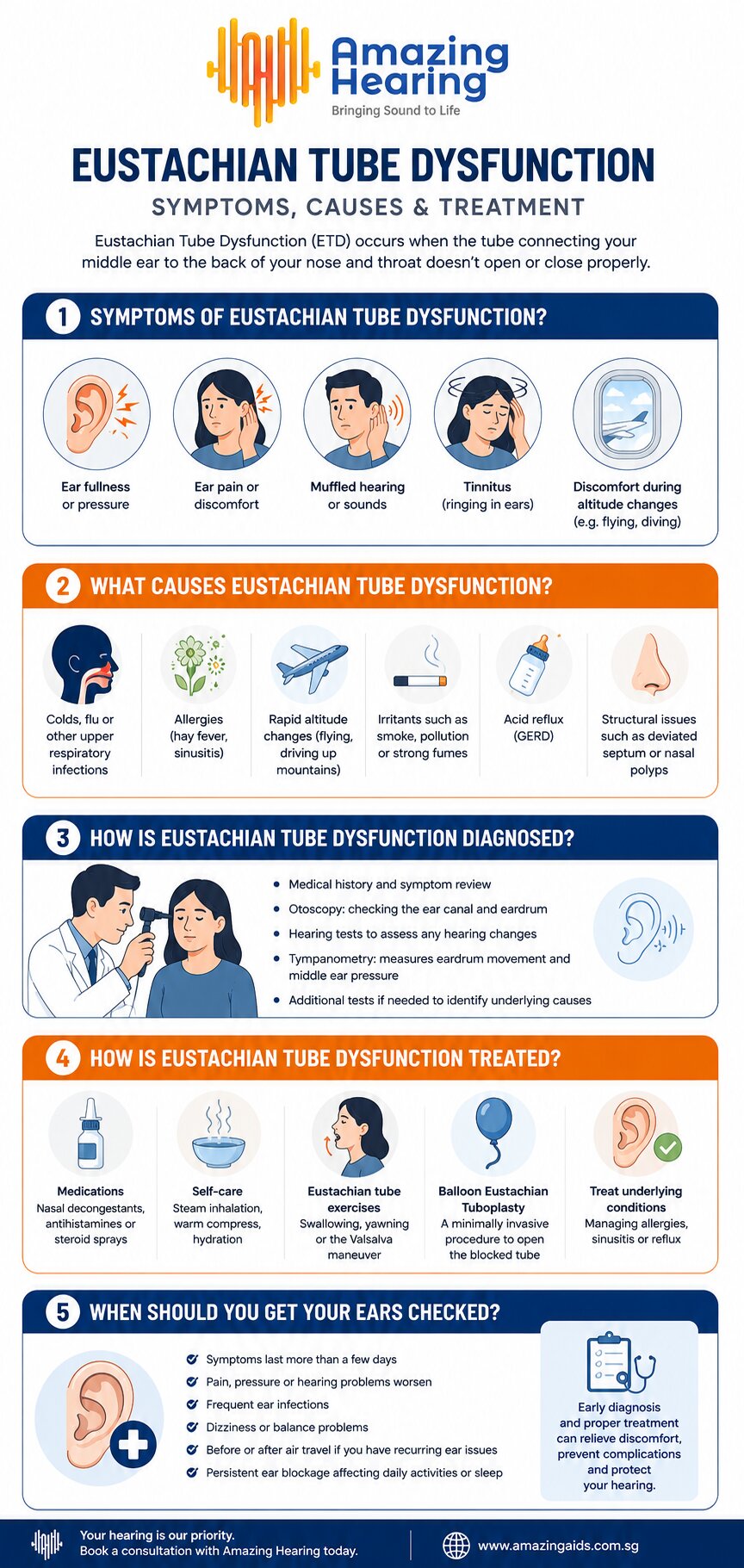
Common symptoms include:
- A feeling of pressure or fullness in the ear
- Muffled or reduced hearing
- Popping or clicking sounds when swallowing or yawning
- Ear pain or discomfort
- A sensation that your ears need to “pop”
- Ringing or buzzing in the ears
- Dizziness or a feeling of imbalance
- Hearing sounds differently from normal
Some people describe the sensation as having water trapped inside their ear. Others may notice that their hearing improves temporarily after swallowing or yawning.
If hearing changes are sudden, severe or occur alongside significant dizziness, discharge or intense pain, it is important to seek medical attention rather than assuming it is simply ETD.
What Causes Eustachian Tube Dysfunction?
Anything that causes inflammation, swelling or changes in pressure around the Eustachian tube can potentially contribute to ETD.
Colds And Respiratory Infections
A cold or other upper respiratory infection can cause swelling around the nose and throat. This can make it harder for the Eustachian tubes to open normally.
This is one reason why your ears may feel blocked when you have a cold. The sensation often improves as the infection and inflammation settle.
Allergies
Allergies, such as allergic rhinitis, can cause inflammation and congestion around the nose and the opening of the Eustachian tubes. If your nose is frequently blocked or irritated by allergens, you may experience recurring ear pressure or muffled hearing.
Sinus Problems
Sinus congestion and inflammation can also affect the surrounding tissues and interfere with normal Eustachian tube function.
Changes In Air Pressure
ETD is particularly noticeable during take-off and landing on an aeroplane. The surrounding air pressure changes rapidly, while the middle-ear pressure needs to adjust.
If the Eustachian tubes cannot open quickly enough, you may experience ear pressure, pain, muffled hearing or popping sensations. This is sometimes referred to as airplane ear or barotrauma.
Enlarged Adenoids
In children, enlarged adenoids can sometimes interfere with the opening of the Eustachian tubes. Children are also more prone to Eustachian tube problems because their tubes are shorter and positioned differently compared with adults.
Structural Or Other Medical Causes
Less commonly, ongoing ETD may be associated with structural differences, chronic inflammation or other conditions affecting the ear, nose or throat. Persistent symptoms therefore deserve proper assessment rather than repeated self-treatment.
Is Eustachian Tube Dysfunction Serious?
Most cases of ETD are not serious and resolve once the underlying cause improves.
For example, ear pressure associated with a cold may disappear as congestion clears. Similarly, pressure changes during a flight often settle after landing and equalising the ears.
However, symptoms that continue for several weeks, repeatedly return or significantly affect your hearing should be assessed.
Persistent pressure or hearing changes can sometimes be related to fluid behind the eardrum, middle-ear problems or another condition that may need treatment.
How Is Eustachian Tube Dysfunction Diagnosed?
A healthcare professional will usually start by asking about your symptoms and examining your ears.
Depending on your symptoms, an assessment may include:
- Ear examination: Looking at the ear canal and eardrum for signs of fluid, inflammation or other problems.
- Hearing test: Checking whether there is a measurable change in hearing.
- Tympanometry: Measuring how well the eardrum and middle ear respond to changes in air pressure.
- Nasal or throat examination: Looking for congestion, inflammation or other factors that may be affecting the Eustachian tubes.
A hearing test can be particularly useful when ETD is accompanied by muffled hearing, because hearing changes can have several possible causes.
How Is Eustachian Tube Dysfunction Treated?
Treatment depends on the underlying cause and how long the symptoms have been present.
Give It Time
If ETD is caused by a cold or temporary congestion, it may improve on its own as the inflammation settles.
During this period, swallowing, yawning and chewing can encourage the Eustachian tubes to open naturally.
Manage Allergies And Nasal Congestion
If allergies are contributing to ETD, managing the underlying allergy may help reduce inflammation around the Eustachian tubes.
A healthcare professional can advise whether treatments such as nasal sprays or other allergy medications are appropriate for you.
Equalising Ear Pressure
For pressure-related ETD, swallowing, yawning or chewing gum can encourage the tubes to open.
Some people use pressure-equalising techniques such as the Valsalva manoeuvre, but these should be performed gently. Forcing pressure aggressively can potentially injure the ear.
Medical Treatment
If symptoms are persistent, a doctor may recommend treatment based on the underlying cause. This could include treatment for allergies, nasal inflammation, infection or other conditions affecting the Eustachian tubes.
In chronic or severe cases, an ENT specialist may consider procedures designed to improve Eustachian tube function.
Can Eustachian Tube Dysfunction Affect Your Hearing?
Yes. ETD can cause conductive hearing changes because pressure or fluid in the middle ear can interfere with the normal movement of the eardrum and middle-ear structures.
People often describe the resulting hearing as:
- Muffled
- Distant
- “Underwater”
- Quieter than usual
This type of hearing change may improve once the Eustachian tube starts functioning normally again.
However, not every blocked-ear sensation is caused by ETD. Earwax buildup, ear infections, noise exposure and other hearing conditions can produce similar symptoms. If you are unsure about the cause, a hearing assessment can help identify what is happening.
When Should You Get Your Ears Checked?
Occasional ear pressure after a flight or during a cold is usually not a reason for concern. However, you should consider getting your ears assessed if:
- Ear pressure or fullness does not go away
- Your hearing remains muffled
- Symptoms repeatedly return
- You experience persistent ringing in your ears
- You have ongoing dizziness or balance problems
- You develop significant ear pain
- There is fluid or discharge coming from the ear
Sudden hearing loss should be treated as a medical emergency. If your hearing suddenly drops, particularly in one ear, seek urgent medical attention rather than waiting for the blockage to clear.
Eustachian Tube Dysfunction And Hearing Health
Eustachian tube dysfunction can be uncomfortable, but understanding what is happening can make the experience less worrying. In many cases, the problem is temporary and linked to something as simple as a cold, allergies or changes in air pressure.
The important thing is not to assume that every blocked or muffled ear is ETD. If symptoms persist or your hearing has changed, having your ears and hearing properly assessed is the best way to identify the cause.
At Amazing Hearing, our hearing professionals can assess your hearing and help you understand whether your symptoms may be affecting your hearing health. If you have been experiencing persistent muffled hearing, ear pressure or other changes, book a hearing assessment to find out more.
