
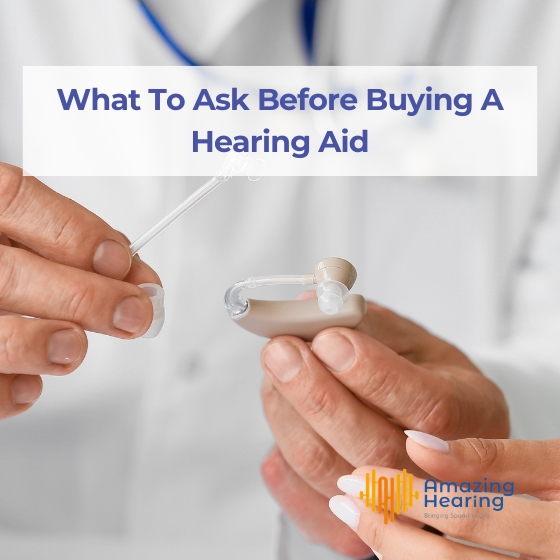
Short answer: Ask five things before you buy a hearing aid: what your hearing test shows, why this specific device suits your hearing loss, what the price includes, how it will be fitted and adjusted, and who supports you after purchase.
The right hearing aid depends on your hearing profile, lifestyle, comfort, and the care that comes with it, not the price tag or the feature list.
Why Ask Questions Before Buying A Hearing Aid?
Because the most expensive hearing aid is often not the most suitable one. Styles, technology levels and prices vary widely, and a device that is wrong for your type of hearing loss will disappoint no matter how much it costs.
A good hearing care professional should:
- Explain your hearing test results in plain terms
- Ask about your everyday listening situations
- Walk you through the fitting and adjustment process
The questions below help you compare clinics and devices on more than price.
Questions To Ask About Your Hearing
1. What Does My Hearing Test Show?
Start with your hearing, not the device. Ask your hearing care professional to explain your results in simple language:
- What type of hearing loss do I have?
- Is it mild, moderate, severe or profound?
- Is it different between my two ears?
- Would both ears benefit from hearing aids?
- Did anything in the test suggest I should see a doctor or ENT specialist?
Your hearing profile decides what type of hearing aid and how much amplification you need.
2. Why Is This Hearing Aid Suitable For Me?
There is no single best hearing aid. Ask why a particular device was recommended, and how it matches your hearing loss. Depending on your needs, these factors may matter:
- Amplification range
- Feedback management
- Speech processing
- Connectivity
Swap “What is the best hearing aid?” for “Why is this hearing aid suitable for me?” You will get a personalised answer, rather than a sales pitch.
3. Do I Need Hearing Aids In Both Ears?
If both ears have hearing loss, you will usually benefit from two hearing aids. Two devices give you:
- Better access to sounds from both sides
- Clearer sense of where sounds are coming from
The recommendation should still be based on your assessment. Ask the professional to explain the expected difference between one and two hearing aids in your case.
4. What Will The Hearing Aid Actually Help Me Hear?
A hearing aid improves access to sound but does not restore natural hearing completely. Ask what improvement you can realistically expect in:
- Conversations at home
- Restaurants and cafes
- Meetings and group conversations
- Watching television
- Phone calls
- Outdoor listening
- Noisy environments
Knowing what to expect makes the adjustment period much easier.
Questions To Ask About Hearing Aid Features
5. Which Features Do I Actually Need?
More features do not mean a better hearing aid. Common options include Bluetooth connectivity, rechargeable batteries, automatic programmes, noise management and smartphone controls.
Match features to your day:
|
Your situation |
Feature worth asking about |
|---|---|
|
Frequent phone calls or audio streaming |
Bluetooth connectivity |
|
Restaurants, group settings, busy places |
Background noise management, dedicated programmes |
|
Don’t want to change tiny batteries |
Rechargeable batteries |
|
Want to adjust volume or settings yourself |
Smartphone app controls |
|
Move between quiet and noisy places often |
Automatic programme switching |
The question to ask: “Which features would make a real difference to how I live and communicate?”
6. How Does It Perform In Noisy Places?
Noisy environments are the hardest listening situations for most people, so ask directly about this. Find out:
- How the device handles background noise
- Whether there are specific programmes for restaurants, meetings or busy settings
- Whether the professional can fine-tune these settings after you have used the hearing aids in real life
Questions To Ask About Fitting And Adjustment
7. How Will My Hearing Aids Be Fitted?
A hearing aid should be programmed to your hearing test results, then verified. Ask:
- How does the fitting process work?
- Will the settings be checked against my hearing levels?
- How will you confirm the amplification is right for me?
Buying the device is only one part of the process. A proper fitting is what makes it work.
8. How Many Follow-Up Adjustments Are Included?
Your first fitting is rarely your final setting. Your brain needs time to adapt to amplified sound, and you will notice situations that need tweaking. Ask:
- How many follow-up appointments are included?
- Are adjustments included in the purchase price?
- Can I come back for fine-tuning if something feels off?
- What happens if I struggle with the hearing aids after the first few weeks?
Questions To Ask About Cost
9. What Is Included In The Price?
Two hearing aids at the same price can come with very different levels of support. Ask whether the quoted cost covers:
- Hearing assessment
- Fitting
- Follow-up appointments
- Fine-tuning
- Accessories
- Chargers or batteries
- Warranty
- Repairs or servicing
Compare the full package, not the sticker price.
10. What If I Am Not Happy With The Hearing Aid?
Ask about the trial, exchange or return policy before you pay.
You need time to judge comfort and real-world performance, so find out what your options are if the device does not work for you. Get these terms in writing before purchase.
Questions To Ask About Long-Term Care
11. How Often Should My Hearing Be Checked?
Hearing changes over time, so care does not end at the fitting. Ask how often you should have your hearing reviewed and whether your hearing aids can be re-adjusted if your hearing changes. Regular reviews also let the clinic check the condition and performance of your devices.
12. Who Helps Me If Something Goes Wrong?
Ask what support is available after you take the hearing aids home. Issues with fit, sound quality, connectivity or battery life are common. Know who to contact and whether that support is included in your purchase.
Quick Checklist: Questions To Ask Before Buying A Hearing Aid
|
Question |
Why it matters |
|---|---|
|
What does my hearing test show? |
You understand your hearing needs |
|
Why is this hearing aid suitable for me? |
The recommendation matches your hearing loss |
|
Do I need one or two hearing aids? |
You understand your options |
|
Which features do I actually need? |
You avoid paying for features you won’t use |
|
How will the hearing aid be fitted? |
Fitting affects comfort and performance |
|
How many adjustments are included? |
The device can be fine-tuned over time |
|
What is included in the price? |
You can compare total cost fairly |
|
Is there a trial or return period? |
You have options if it doesn’t suit you |
|
What aftercare is provided? |
You know where to get help later |
|
How often should my hearing be checked? |
Your hearing care continues long-term |
Should I Choose A Hearing Aid Based On Price?
No. Price matters, but fit, sound quality, correct amplification and professional support matter more for something you wear many hours a day.
Compare the complete package: assessment, fitting, adjustments and aftercare.
Final Thoughts
Understand your hearing test first, then ask why a specific hearing aid was recommended and what it will realistically do for you.
The most important question is about what happens after purchase. A hearing aid is part of an ongoing care process, from the first assessment through fitting, adjustments and future reviews.
If you are considering hearing aids, a professional hearing assessment is the right first step to understand your options.
FAQ
What Should I Ask Before Buying A Hearing Aid?
Ask about your hearing test results, why the recommended device suits you, which features you need, the fitting process, follow-up adjustments, total cost, warranty, trial or return policy and ongoing aftercare.
Should I Buy The Most Expensive Hearing Aid?
Not necessarily. The right hearing aid depends on your hearing loss, listening needs, lifestyle, and which features are useful to you.
How Long Does It Take To Get Used To A Hearing Aid?
It varies. Your brain needs time to adjust to amplified sound, and follow-up appointments help fine-tune the device as you get used to it.
Do I Need Two Hearing Aids?
If you have hearing loss in both ears, a hearing professional will usually recommend two. Ask how one versus two devices would affect your hearing in everyday situations.
