
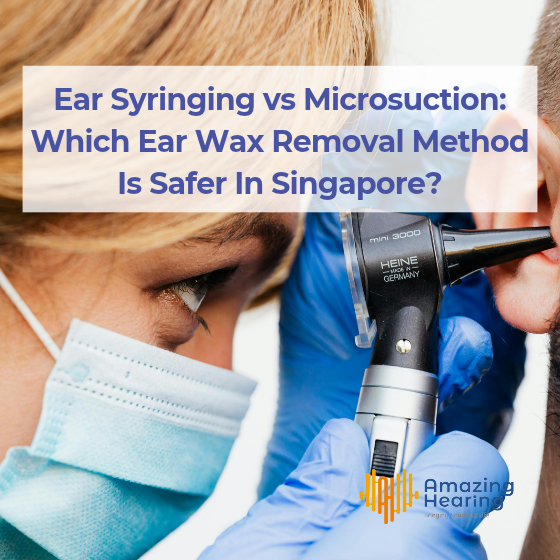
Short answer: Microsuction is the safer choice for most people in Singapore. It is a dry procedure done under a microscope, so the audiologist can see the wax, the canal and the eardrum the whole time.
Ear syringing (irrigation) pushes warm water into the ear and is done blind. It still works for many people, but it is not suitable if you have a perforated eardrum, past ear surgery, an active ear infection, diabetes or a history of dizziness. In Singapore’s humidity, leaving water in the ear canal also raises the risk of fungal and bacterial infection. Amazing Hearing offers microsuction at six clinics islandwide.
How Do You Know If You Need Ear Wax Removal?
If your hearing has gone muffled, your ear feels blocked, or you have started to hear ringing, impacted wax is the most likely cause.
Common signs:
- Muffled or “underwater” hearing, especially after swimming or showering (wax absorbs water and swells)
- A feeling of fullness or a plug in one ear
- Itching deep in the ear canal
- Ringing or buzzing (tinnitus) that appeared recently
- Hearing aids whistling or feeding back more than usual
- Earache or a dull pressure without fever
Wax is normal and protective. It traps dust and bacteria and keeps the canal skin from drying out, which matters in a humid climate. It only becomes a problem when it builds up faster than the ear can clear it, or when cotton buds push it deeper and pack it against the eardrum.
What Is Ear Syringing (Irrigation)?
Ear syringing flushes the wax out with a stream of body-temperature water. It is the method most Singapore GP clinics use, and it is cheap, typically around S$20 to S$30 per ear.
How it works:
- You use softening drops (olive oil or a pharmacy cerumenolytic) for a few days beforehand
- The practitioner directs warm water into the canal with an electronic irrigator or, in older setups, a hand-held syringe
- The water loosens the plug and carries it out
- The canal is checked with an otoscope afterwards
International guidance from the UK’s NICE no longer recommends manual syringing with a metal syringe because pressure cannot be controlled. Electronic irrigation is still an accepted method, provided the practitioner checks for contraindications first.
What Is Ear Microsuction?
Microsuction removes wax with a fine, low-pressure suction tube while the audiologist watches the canal through a high-magnification microscope or loupes. No water is used.
How it works:
- Video otoscopy first, so you can see the blockage on screen
- The audiologist guides a small suction wand to the wax and lifts it out
- Hard pieces may be loosened with a fine micro-instrument
- The canal and eardrum are checked once clear
It takes 15 to 30 minutes. You will hear a rushing wind sound during the procedure, and the tip feels cool. Most people find it more comfortable than irrigation.
What Are The Risks Of Ear Syringing?
Syringing is done without seeing the wax or the eardrum, which is where most of its risks come from.
- Eardrum perforation. If the water pressure is too high or the plug is very hard, the force can tear the eardrum. This is why syringing is not advised for anyone with a previous perforation, grommets or ear surgery.
- Wax pushed deeper. Without a view of the canal, the water can compact the plug against the eardrum instead of flushing it out, which makes the next removal harder.
- Dizziness. Water that is not exactly body temperature stimulates the inner ear’s balance organ (the caloric effect). Some people feel lightheaded or nauseous during or after the procedure.
- Temporary tinnitus spike. The turbulence of water against the eardrum can briefly worsen ringing.
- Outer ear infection. Water left behind in the canal, especially with leftover wax, creates a warm, damp environment where bacteria and fungi grow. In Singapore, where relative humidity sits above 80% most of the year, the canal is already damp before you add water.
People who should avoid syringing altogether:
- Perforated eardrum, now or in the past
- Grommets or any ear surgery
- Active outer ear infection (otitis externa) or ear eczema
- Diabetes or a weakened immune system (higher risk of serious canal infection from a small abrasion)
- History of vertigo or balance problems
- Only one hearing ear
Why Is Microsuction The Safer Choice In Singapore?
Microsuction avoids the two things that cause most syringing complications: water and working blind.
|
Ear syringing (irrigation) |
Microsuction |
|
|---|---|---|
|
Uses water |
Yes |
No |
|
Practitioner can see the wax and eardrum |
No |
Yes, under magnification |
|
Safe with a perforated eardrum |
No |
Yes |
|
Safe with an active ear infection |
No |
Usually yes |
|
Safe for diabetics and immunocompromised |
Not advised |
Yes |
|
Risk of dizziness |
Moderate (temperature effect) |
Low |
|
Infection risk afterwards |
Higher (trapped moisture) |
Minimal |
|
Noise during procedure |
Quiet |
Loud rushing sound |
|
Softening drops needed beforehand |
Yes, several days |
Helpful, 2 to 3 days |
|
Time |
15 to 30 min plus drying |
15 to 30 min, no downtime |
|
Where it is done in Singapore |
Most GP clinics |
ENT clinics and audiology centres |
|
Typical cost |
Around S$20 to S$30 per ear |
Higher; varies by clinic |
Three reasons the dry method matters more here than in a temperate country:
- Fungal ear infections (otomycosis) are common in the tropics and thrive on moisture. Not adding water removes the trigger.
- Singapore has a high rate of diabetes. For diabetics, a minor water-pressure abrasion can turn into a serious infection, so a no-water, no-pressure method is the safer default.
- You can go straight back to work, put earphones in or wear your hearing aids. There is no soggy-ear feeling and nothing to dry out.
Microsuction does have two downsides worth knowing. It is louder, and very hard, dry wax sometimes needs a second visit after more softening drops. Neither is a safety issue.
Which Method Is Right For You?
|
Your situation |
Recommended method |
|---|---|
|
Healthy eardrum, no ear history, budget is the priority |
Either; syringing at a GP is fine |
|
Perforated eardrum, grommets or past ear surgery |
Microsuction only |
|
Active ear infection, eczema or itchy canal |
Microsuction |
|
Diabetes or weakened immune system |
Microsuction |
|
Prone to dizziness or vertigo |
Microsuction |
|
Hearing aid wearer |
Microsuction, with a check every 6 months |
|
Very hard, old wax |
Microsuction with manual instruments, after softening drops |
|
Sudden pain, discharge or rapid hearing loss |
See an audiologist or ENT promptly, not a GP flush |
What Should Hearing Aid Users Know?
Wax is the number one cause of hearing aid feedback. When sound from the receiver hits a wax wall, it bounces back into the microphone and you get that high-pitched whistle.
- Hearing aids sit in the canal and block the ear’s natural self-cleaning, so wax builds up faster
- Wax that migrates into the receiver or dome muffles the sound and can damage the device
- Get a professional canal check every six months if you wear hearing aids daily
- Ask your audiologist to check the wax guards and domes at the same visit
Keeping the canal clear protects both your hearing and the device, whether you wear a ReSound Nexia, a Phonak, an Oticon or any other model.
What Happens At An Ear Wax Removal Appointment?
The whole visit takes about 30 minutes.
- Video otoscopy. You see your own ear canal and the blockage on screen before anything is done.
- Microsuction. The audiologist clears the wax under magnification. You feel a light, cool sensation and hear a rushing sound. Stubborn pieces are loosened with a micro-instrument.
- Post-clearance check. The canal and eardrum are inspected. If your hearing is still muffled with the wax gone, a hearing test can be done on the spot to look for other causes.
Softening drops for two to three days beforehand make the procedure quicker and gentler, but you can still be seen without them.
How Do You Prevent Wax Build-Up?
- Stop using cotton buds. They push wax inward and scratch the canal skin
- Skip ear candling. It does not remove wax and causes burns
- Dry your ears gently after swimming; tilt your head and use a towel on the outer ear only
- If you produce a lot of wax, use a few drops of olive oil once a week to keep it soft
- Hearing aid users: clean domes and wax guards as instructed and book a six-monthly check
Frequently Asked Questions
Is microsuction painful compared to syringing?
No. Most people describe microsuction as a gentle vacuuming or a cool breeze with a loud rushing sound. Syringing is quieter but the water pressure can be uncomfortable, particularly if the canal is inflamed.
Can I have microsuction with a perforated eardrum?
Yes. It is the recommended method for a perforated eardrum because no water or pressure enters the middle ear. Syringing should not be done at all in this case.
How long does ear wax removal take?
15 to 30 minutes including the otoscopy. Microsuction has no drying time afterwards, so you can go straight back to work.
Do I need ear drops before microsuction?
Not always, but two to three days of olive oil drops softens the wax and makes the procedure faster and gentler. Singapore’s heat can harden wax, so pre-treatment helps.
Is microsuction safe for children and the elderly?
Yes. The magnified view lets the audiologist work precisely in small canals and with patients who find it hard to stay still. It also avoids the dizziness that syringing can cause, which matters for older adults with balance concerns.
What if the wax is too hard to suction?
The audiologist will loosen it with fine manual instruments. If it is rock-hard, you may be asked to use softening drops for a few more days and return. Nothing is forced.
How often should hearing aid users get their ears cleaned?
Every six months. Hearing aids block natural wax migration, so build-up is faster and causes feedback and receiver blockages.
Can ear syringing cause permanent tinnitus?
Rarely, and only if the pressure damages the eardrum or inner ear. If you already have tinnitus, a dry, visualised method is the lower-risk option.
How much does ear wax removal cost in Singapore?
GP syringing is typically S$20 to S$30 per ear. Microsuction at ENT clinics and audiology centres costs more because of the equipment and expertise involved. Contact your nearest Amazing Hearing clinic for current pricing.
Final Thoughts
If your ears are healthy and you want the cheapest option, a GP flush is acceptable.
If you have any ear history, wear hearing aids, have diabetes, or simply want the procedure done with the practitioner able to see what they are doing, micro suction is the safer choice, and the dry method suits Singapore’s climate.
Book a session at your nearest Amazing Hearing clinic and see the blockage for yourself on the otoscopy screen before it is cleared.
