
When most people hear the term “glue ear”, they associate it with young children. However, glue ear can also affect adults, and it may be more common than many people realise. Because the symptoms often develop gradually, adults may mistake the condition for temporary congestion, allergies, or even age-related hearing loss.
Understanding the signs, causes, and treatment options can help you seek appropriate care before the condition starts affecting your daily life.
Can Glue Ears Occur in Adults?
Yes, glue ear can occur in adults, although it is less common than in children. It happens when fluid builds up behind the eardrum, affecting hearing and creating a feeling of blockage or pressure in the ear.
In adults, glue ear may be linked to allergies, sinus problems, upper respiratory infections, or issues affecting the Eustachian tube. Persistent symptoms should always be assessed by a healthcare professional.
What Is Glue Ear?
Glue ear, also known as otitis media with effusion (OME), occurs when fluid accumulates in the middle ear without an active infection.
Under normal circumstances, the middle ear is ventilated by the Eustachian tube, which connects the ear to the back of the nose and throat. When this tube becomes blocked or does not function properly, fluid can become trapped behind the eardrum.
The trapped fluid is often thick and sticky, which is why the condition is commonly referred to as “glue ear”.
Why Does Glue Ear Occur in Adults?
Several factors can contribute to glue ear in adulthood.
Upper Respiratory Infections
Colds, flu, and other respiratory infections can cause inflammation around the Eustachian tube, preventing it from draining fluid effectively.
Allergies
Hay fever, dust allergies, and other allergic conditions can lead to swelling inside the nasal passages and Eustachian tube, increasing the risk of fluid accumulation.
Chronic Sinus Problems
Persistent sinus inflammation may affect pressure regulation in the ears and contribute to ongoing middle ear fluid.
Smoking and Environmental Irritants
Exposure to cigarette smoke and airborne irritants can increase inflammation within the upper airway and affect Eustachian tube function.
Air Pressure Changes
Frequent flying or diving can sometimes trigger Eustachian tube dysfunction, especially if a person already has nasal congestion or sinus issues.
Underlying Medical Conditions
In some cases, persistent glue ear in adults may be associated with structural issues or growths affecting the back of the nose and throat. This is one reason why ongoing symptoms should not be ignored.
Common Symptoms of Glue Ear in Adults
The symptoms can vary from person to person but often include:
- Muffled or reduced hearing
- A sensation of fullness or blockage in the ear
- Popping or crackling sounds
- Mild ear discomfort or pressure
- Difficulty hearing conversations in noisy environments
- Tinnitus (ringing or buzzing in the ear)
- Occasional balance disturbances
Because these symptoms can overlap with other hearing conditions, professional assessment is important for an accurate diagnosis.
How Is It Different from Hearing Loss?
Many adults assume they are developing hearing loss when they notice difficulty hearing conversations.
The key difference is that glue ear causes a conductive hearing loss, meaning sound cannot travel efficiently through the middle ear due to the trapped fluid. Once the fluid resolves or is treated, hearing often improves significantly.
Age-related hearing loss, on the other hand, usually involves changes within the inner ear and tends to be permanent.
This distinction is why hearing tests play an important role in identifying the underlying cause of hearing difficulties.
When Should You See a Doctor?
While glue ear may sometimes resolve on its own, adults should seek medical advice if symptoms:
- Persist for more than a few weeks
- Affect daily communication
- Occur in only one ear
- Are accompanied by significant pain
- Are associated with dizziness or balance issues
A healthcare professional may examine the ears, assess nasal and sinus health, and recommend further investigations if necessary.
How Is Glue Ear Diagnosed?
Diagnosis typically involves:
Ear Examination
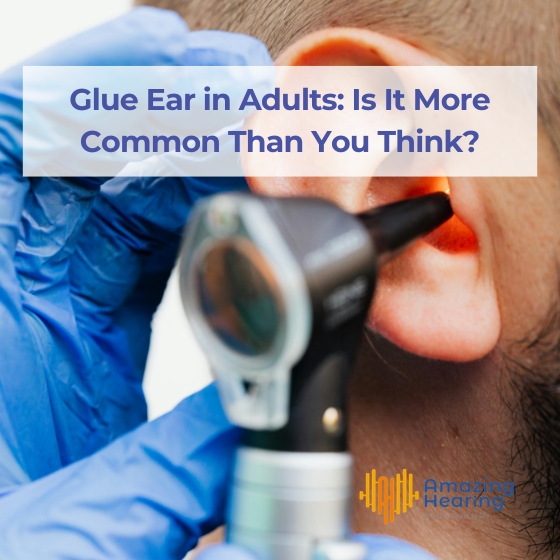
A doctor may use an otoscope to look for signs of fluid behind the eardrum.
Tympanometry
This test measures how well the eardrum moves and can help identify fluid in the middle ear.
Hearing Assessment
A comprehensive hearing evaluation can determine the extent of hearing loss and whether the problem originates in the middle ear or inner ear.
At an audiology clinic, hearing tests can provide valuable information about how glue ear is affecting your hearing and whether further medical referral may be needed.
Treatment Options for Adults
Treatment depends on the cause and severity of the condition.
Watchful Waiting
Some cases improve naturally once inflammation or congestion resolves.
Managing Allergies or Sinus Conditions
Treating underlying nasal or sinus problems may improve Eustachian tube function and reduce fluid build-up.
Medical Treatment
Doctors may recommend specific medications depending on the underlying cause.
Surgical Options
If fluid persists for an extended period or causes significant hearing difficulties, procedures such as grommet insertion may be considered.
Can Glue Ear Affect Long-Term Hearing?
In most cases, glue ear does not cause permanent hearing damage when appropriately managed.
However, prolonged untreated fluid can impact communication, work performance, and quality of life. Adults who delay seeking help may experience ongoing hearing difficulties that affect social interactions and daily activities.
Early assessment helps identify whether symptoms are due to glue ear or another hearing condition requiring different treatment.
Don’t Ignore Persistent Ear Blockage
Glue ear is often considered a childhood condition, but adults can develop it too. If you are experiencing muffled hearing, ear pressure, or a persistent blocked sensation, it is worth investigating rather than assuming it will simply disappear.
A professional hearing assessment can help determine whether glue ear is affecting your hearing and whether further medical evaluation is needed. Understanding the cause is the first step towards restoring clear and comfortable hearing.
Contact Amazing Hearing to arrange a comprehensive hearing assessment and receive professional guidance on the next steps for your hearing health.
